What Is Business Automation? Everything You Need to Know
Every business wants more leads, but generating leads is only one part of the sales journey. The real challenge begins after a lead enters your system. Many businesses lose potential customers because they fail to follow up on time, manage customer information properly, or nurture prospects throughout the buying process.
As businesses grow, handling hundreds or even thousands of leads manually becomes nearly impossible. Sales teams often struggle with spreadsheets, missed follow-ups, duplicate records, and communication gaps. These issues can directly impact revenue and customer satisfaction.
This is where Lead Management Automation becomes a game-changer. By automating repetitive sales and marketing tasks, businesses can capture, organize, track, and nurture leads more efficiently. Instead of spending valuable time on manual processes, teams can focus on building relationships and closing deals.
In today’s competitive market, lead management automation is no longer an optional tool- it is an essential business strategy that helps companies improve productivity, increase conversions, and accelerate growth.
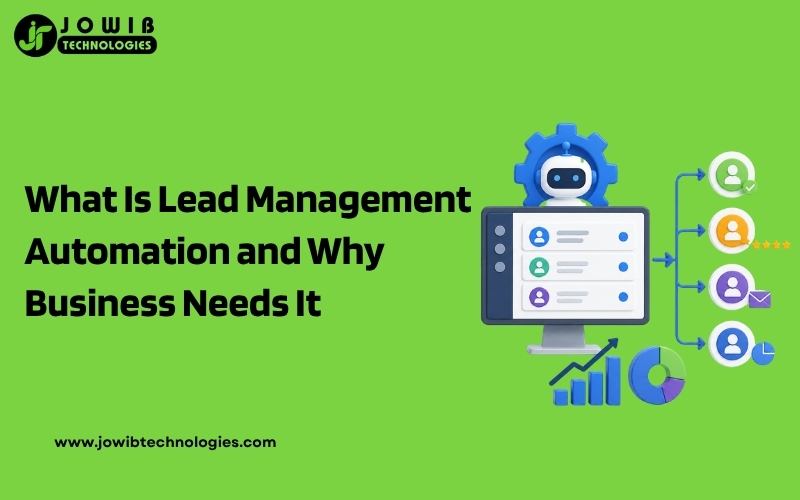
What Is Lead Management Automation?
Lead Management Automation is the process of using software and digital tools to automate the management of potential customers throughout the sales cycle.
It helps businesses automatically collect lead information, organize customer data, assign leads to sales representatives, track interactions, send follow-up communications, and monitor lead progress until conversion.
Simply put, lead management automation ensures that every lead receives proper attention without requiring constant manual intervention.
For example, when someone fills out a contact form on your website, an automated system can instantly:
- Capture the lead’s information
- Store it in a centralized database
- Send a welcome email
- Assign the lead to the appropriate sales representative
- Schedule future follow-ups
- Track all interactions
This entire process happens automatically, reducing delays and increasing the chances of converting the lead into a customer.
Lead management automation acts as a bridge between marketing and sales teams, ensuring that no opportunity is missed.
You Can Also Read: What Is Business Automation? Everything You Need to Know
Importance of Lead Management Automation
Businesses today receive leads from multiple channels, including websites, social media platforms, online advertisements, email campaigns, webinars, referrals, and live chat systems.
Managing all these leads manually creates several challenges:
- Delayed responses
- Missed follow-ups
- Lost customer data
- Poor communication
- Inconsistent customer experiences
- Lower conversion rates
Lead management automation addresses these challenges by creating a structured and efficient workflow.
Faster Response Times
Research consistently shows that businesses that respond to inquiries quickly have a much higher chance of converting prospects.
Automation enables immediate responses, ensuring that leads receive attention while their interest is still high.
Better Lead Organization
Instead of storing information across spreadsheets and different systems, automation centralizes all lead data in one place.
This allows teams to access customer information quickly and accurately.
Improved Sales Efficiency
Sales representatives no longer need to spend hours updating records or manually scheduling follow-ups.
Automation handles administrative tasks so sales teams can focus on selling.
Stronger Customer Relationships
Consistent communication helps build trust with prospects.
Automated email sequences, reminders, and personalized messages ensure that leads remain engaged throughout their buying journey.
Increased Revenue Opportunities
Every missed lead represents lost revenue.
Automation ensures that every lead is tracked and nurtured properly, helping businesses maximize their conversion potential.
How Does Lead Management Automation Work?
Lead management automation follows a structured workflow that guides prospects through the sales funnel.
1. Lead Capture
The process begins when a prospect interacts with your business.
Leads can come from:
- Website forms
- Landing pages
- Social media campaigns
- Online advertisements
- Live chat systems
- Email subscriptions
- Referral programs
The automation platform captures and stores this information automatically.
2. Lead Qualification
Not all leads are equally valuable.
Automation systems evaluate prospects based on specific criteria such as:
- Industry
- Location
- Company size
- Budget
- Job role
- Website behavior
- Engagement level
This process helps identify high-quality leads that are more likely to convert.
3. Lead Scoring
Lead scoring assigns numerical values to leads based on their actions and characteristics.
For example:
- Downloading a brochure = 10 points
- Visiting pricing pages = 20 points
- Requesting a demo = 50 points
Higher scores indicate stronger buying intent.
This helps sales teams prioritize their efforts effectively.
4. Lead Assignment
Once qualified, leads are automatically assigned to the appropriate sales representative.
Assignments can be based on:
- Territory
- Industry specialization
- Product interest
- Workload balancing
This eliminates delays and ensures quick follow-up.
5. Lead Nurturing
Most leads do not make immediate purchasing decisions.
Automation helps nurture prospects through:
- Email campaigns
- Educational content
- Product updates
- Follow-up reminders
- Personalized communication
This keeps your business top-of-mind until prospects are ready to buy.
6. Tracking and Monitoring
Every customer interaction is recorded automatically.
Businesses can track:
- Email opens
- Website visits
- Phone calls
- Meetings
- Form submissions
- Purchase history
These insights help improve sales strategies and customer engagement.
7. Reporting and Analytics
Automation platforms generate detailed reports that provide visibility into:
- Lead sources
- Conversion rates
- Sales performance
- Campaign effectiveness
- Customer behavior
This data helps businesses make informed decisions and improve results.
You Can Also Read : What Is Support Ticket Automation and How Does It Work?
Benefits of Lead Management Automation
Saves Time and Resources
Automation removes repetitive manual tasks, allowing employees to focus on higher-value activities.
Tasks such as data entry, scheduling, follow-ups, and reporting are handled automatically.
Improves Lead Conversion Rates
Prompt responses and consistent communication increase the likelihood of converting leads into paying customers.
Reduces Human Errors
Manual processes often result in duplicate entries, missing information, and forgotten follow-ups.
Automation minimizes these mistakes.
Enhances Team Productivity
Sales and marketing teams can work more efficiently with organized workflows and centralized customer information.
Improves Customer Experience
Customers appreciate fast responses and personalized communication.
Automation helps deliver a smooth and professional experience.
Supports Business Growth
As lead volume increases, automation allows businesses to scale operations without significantly increasing staffing requirements.
Provides Better Visibility
Real-time dashboards and reports offer valuable insights into sales performance and lead progression.
Strengthens Marketing and Sales Alignment
Automation ensures that marketing-generated leads are properly handed over to sales teams, improving collaboration and efficiency.
Lead Management Tools and Technologies
Several technologies work together to create an effective lead management automation system.
Customer Relationship Management (CRM) Software
CRM platforms serve as the foundation of lead management.
They store customer information, track interactions, and manage sales pipelines.
Key CRM capabilities include:
- Contact management
- Activity tracking
- Sales forecasting
- Pipeline management
- Reporting
You Can Also Read : What Is CRM Integration and Why Does Your Business Need It?
Marketing Automation Platforms
Marketing automation tools help businesses engage leads through:
- Email campaigns
- Landing pages
- Lead nurturing workflows
- Behavioral tracking
These tools help maintain continuous communication with prospects.
Artificial Intelligence (AI)
AI-powered systems can:
- Predict lead quality
- Recommend next actions
- Analyze customer behavior
- Improve lead scoring accuracy
AI helps businesses make smarter sales decisions.
Chatbots and Live Chat
Modern websites use chatbots to:
- Answer customer questions
- Collect lead information
- Schedule appointments
- Qualify prospects
This provides instant engagement and improves user experience.
Analytics and Reporting Tools
Advanced reporting systems help businesses measure:
- Lead generation performance
- Conversion rates
- Campaign effectiveness
- Sales productivity
Data-driven decisions become easier with accurate analytics.
Workflow Automation Tools
Workflow automation streamlines repetitive tasks such as:
- Lead assignments
- Email notifications
- Task creation
- Follow-up reminders
This improves operational efficiency and consistency.
Why Choose Jowib Technologies for Lead Management Automation?
Choosing the right technology partner is just as important as choosing the right software.
Jowib Technologies helps businesses transform their lead management process through innovative automation solutions designed to improve efficiency and drive growth.
Customized Solutions
Every business has unique sales processes and customer journeys.
Jowib Technologies develops tailored automation solutions that align with specific business goals and requirements.
Improved Lead Tracking
Jowib Technologies helps businesses monitor every lead from initial inquiry to final conversion, ensuring that no opportunity is missed.
Advanced Automation Features
Their solutions automate critical tasks such as:
- Lead capture
- Lead qualification
- Lead assignment
- Follow-up scheduling
- Customer communication
- Reporting
This reduces manual work and increases productivity.
Enhanced Customer Engagement
Jowib Technologies enables businesses to create personalized customer experiences through intelligent automation and targeted communication.
Scalable Systems
Whether you’re a startup or an established enterprise, Jowib Technologies provides scalable solutions that grow with your business.
Data-Driven Insights
Advanced analytics and reporting tools help businesses understand customer behavior, optimize sales processes, and improve conversion rates.
Reliable Support
Jowib Technologies provides ongoing support and guidance to ensure businesses get maximum value from their automation investments.
By partnering with Jowib Technologies, organizations can streamline operations, improve lead conversion rates, and build stronger customer relationships.
Overall
Lead management automation has become an essential component of modern business growth. In a world where customers expect fast responses and personalized experiences, relying on manual lead management methods can limit your success.
Automation helps businesses capture leads efficiently, nurture prospects effectively, improve team productivity, and increase sales conversions. It eliminates repetitive tasks, reduces human errors, and provides valuable insights that support smarter business decisions.
Whether you are a small business looking to organize your sales process or a growing enterprise seeking scalable solutions, lead management automation can significantly improve your ability to attract, engage, and convert customers.
With the right strategy and the right technology partner such as Jowib Technologies, businesses can build a stronger sales pipeline, improve customer experiences, and create sustainable long-term growth.
The future of sales is automated, data-driven, and customer-focused. Investing in lead management automation today can help your business stay competitive and achieve better results tomorrow.