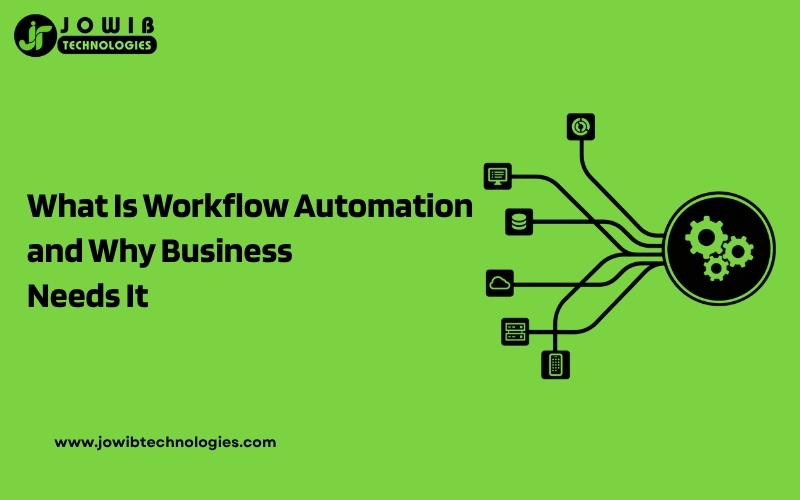
Modern businesses handle hundreds of daily activities, from managing customer requests and approvals to processing invoices and updating records. While these tasks are essential, performing them manually can slow operations, increase errors, and reduce productivity.
To stay competitive and efficient, businesses are increasingly adopting workflow automation.
Workflow automation helps organizations streamline repetitive tasks, reduce manual work, and create smoother business operations. Whether you run a startup, small business, or large company, automation can improve how your teams work every day.
What Is Workflow Automation?
Workflow automation is the use of software and technology to automate repetitive business processes and move tasks through predefined steps without manual intervention.
Instead of employees handling every action manually, automated systems trigger actions automatically based on specific rules and conditions.
For example:
- A customer submits a contact form → an automatic confirmation email is sent.
- An invoice is approved → the finance team receives a payment notification.
- A support request is created → the ticket is automatically assigned to the right department.
Workflow automation removes unnecessary manual effort and helps businesses operate more efficiently.
You Can Also Read : What Is Business Automation? Everything You Need to Know
Benefits of Workflow Automation
1. Saves Time
Automation eliminates repetitive tasks and allows employees to focus on strategic and valuable work.
2. Improves Productivity
Teams complete tasks faster with fewer delays and interruptions.
3. Reduces Human Errors
Automated workflows follow consistent rules, reducing mistakes caused by manual data handling.
4. Enhances Collaboration
Departments work more efficiently through automated notifications and process tracking.
5. Improves Customer Experience
Customers receive faster responses and more reliable service.
6. Increases Visibility and Control
Businesses can track workflows, monitor progress, and identify bottlenecks more easily.
7. Supports Business Growth
Automation allows operations to scale without significantly increasing workload.
You Can Also Read : What Is Web Automation and How Does It Work?
How Workflow Automation Works
Workflow automation generally follows four simple steps:
Step 1: Trigger
An action initiates the process.
Example:
A customer places an order.
Step 2: Rule Processing
The system checks predefined conditions.
Example:
Verify payment status.
Step 3: Automated Action
The workflow performs tasks automatically.
Example:
Generate invoices and notify departments.
Step 4: Monitoring and Completion
The workflow tracks progress and completes the process automatically.
This structure helps businesses maintain consistency and improve operational speed.
You Can Also Read : What Is CRM Integration and Why Does Your Business Need It?
Workflow Automation vs Manual Processes
| Workflow Automation | Manual Processes |
|---|---|
| Faster execution | Slower completion |
| Higher efficiency | More repetitive work |
| Lower error rates | Greater risk of mistakes |
| Easy tracking | Difficult monitoring |
| Scalable operations | Limited scalability |
| Automatic updates | Manual follow-ups |
Manual processes may work initially, but as businesses grow, automation becomes essential for maintaining efficiency.
Business Processes That Can Be Automated
Workflow automation can improve nearly every department.
Sales
- Lead assignment
- Follow-up reminders
- Proposal approvals
Marketing
- Email campaigns
- Lead nurturing
- Campaign reporting
Human Resources
- Employee onboarding
- Leave approvals
- Document management
Finance
- Invoice processing
- Payment approvals
- Expense management
Customer Support
- Ticket routing
- Customer notifications
- Feedback collection
Operations
- Task assignments
- Inventory updates
- Reporting workflows
Businesses can start small and gradually automate more complex processes over time.
Examples of Workflow Automation
Workflow automation can be applied across different business functions to reduce manual work and improve efficiency. Here are some practical examples:
Customer Inquiry Management
When a customer submits an inquiry through a website form, the system automatically sends a confirmation email and assigns the request to the appropriate team member.
Employee Onboarding
When a new employee joins the company, the workflow automatically creates onboarding tasks, shares required documents, schedules training, and notifies relevant departments.
Invoice Approval Process
Invoices are automatically forwarded to managers for approval and then sent to the finance team for processing once approved.
Lead Management
When a new lead enters the CRM, the system assigns it to the sales team and schedules follow-up reminders automatically.
Customer Support Ticket Routing
Support requests are automatically categorized and assigned to the correct department to improve response times.
Marketing Campaign Automation
Email campaigns can automatically send welcome emails, promotional offers, and follow-up messages based on customer behavior.
Leave and Attendance Management
Employees submit leave requests online, and approvals move automatically through the reporting structure.
Order Processing and Notifications
When an order is placed, inventory updates, payment confirmations, and shipping notifications are triggered automatically.
These examples show how workflow automation helps businesses reduce repetitive work and create faster, more organized operations.
You Can Also Read : What Is Support Ticket Automation and How Does It Work?
Why Choose Jowib Technologies for Workflow Automation?
Jowib Technologies helps businesses simplify operations through intelligent workflow automation solutions designed to improve efficiency and productivity.
Here’s why businesses choose Jowib Technologies:
Customized Automation Solutions
Workflows are developed according to your business requirements and goals.
Process Optimization
Identify bottlenecks and improve operational performance.
Seamless System Integration
Connect existing business tools and platforms for smoother workflows.
Scalable Solutions
Build automation systems that support future business growth.
Ongoing Support
Receive guidance and support to maintain optimized workflows.
Jowib Technologies focuses on creating practical automation solutions that help businesses save time, reduce manual effort, and improve overall efficiency.
You Can Also Read : What Is Lead Management Automation and Why Every Business Needs It
Overall
Workflow automation is no longer an optional improvement—it has become an important part of modern business operations.
By automating repetitive tasks, businesses can improve productivity, reduce errors, strengthen collaboration, and deliver better customer experiences.
Whether you want to streamline internal processes or scale operations efficiently, workflow automation provides a smarter way to work. With the right automation strategy and technology partner like Jowib Technologies, businesses can create faster, more reliable, and future-ready operations.